

Partial/Unicompartmental/ Knee replacement (UKA)
Authors
A/Prof Keran Sundaraj MBBS, MSc (Trauma), FRACS, FAOrthA
Your knee has three parts. Sometimes only one part wears out. Other times, the whole knee wears out. There are two different operations to fix these two situations, and each one comes with a different trade-off.
What gets replaced
Partial Knee Replacement
● Replaces only the worn-out part of the knee
● Leaves the healthy parts of your own knee alone, including your ligaments
● Less disruption to the body
● Only works if just one part of the knee is worn out
Total Knee Replacement
● Replaces the whole knee
● Used when more than one part is worn out
● A bigger operation. More of your own knee gets swapped out for metal and plastic
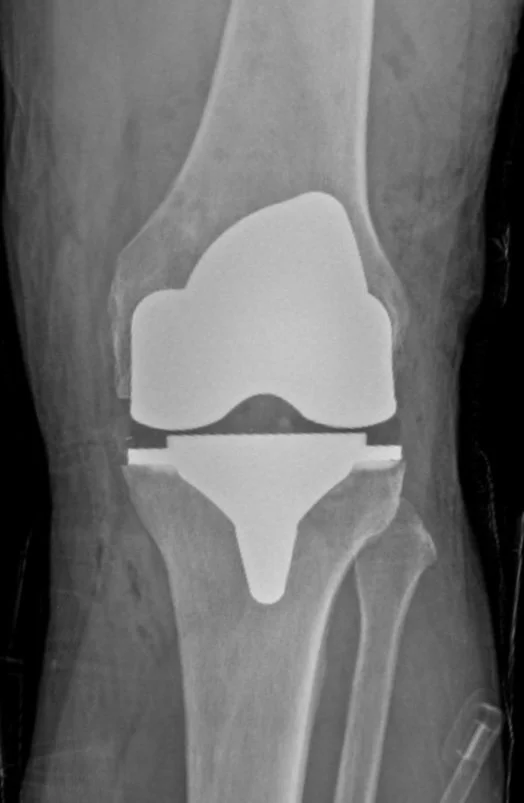
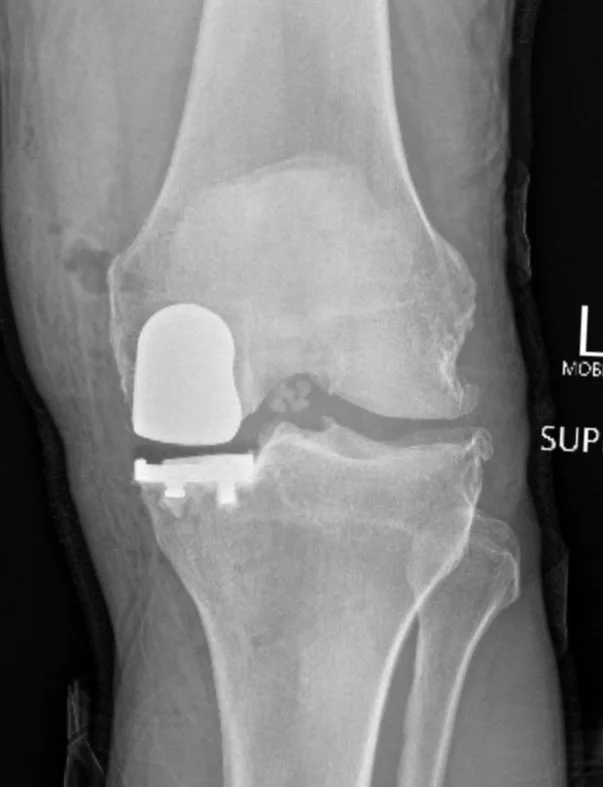
This is the big decision, and there's no single "right" answer. It comes down to two things pulling in opposite directions:
Total knee replacement: Less likely to need replacing again. But because the whole joint is swapped out, it can feel a bit more like an artificial knee than your own knee.
Partial knee replacement: Since more of your own knee stays put, it usually feels more normal. But it's more likely to need fixing again later, especially if you're younger.
Both operations have upside and downsides, just different ones.
How likely is it to need fixing again?
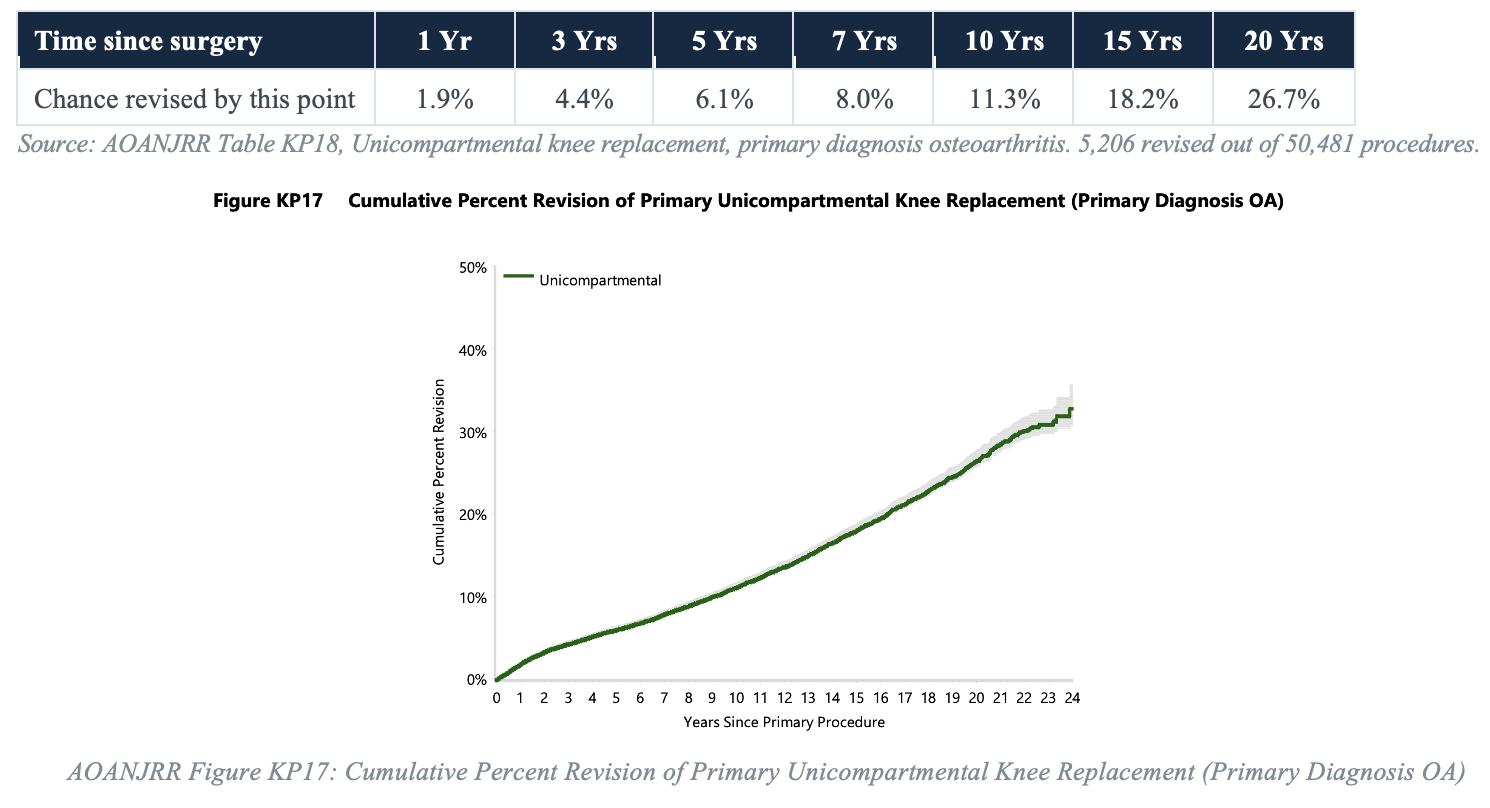
We call this a "revision", it means going back in to fix or replace part of the knee replacement. The tables and graphs below come straight from the joint registry, they are not estimates.
Partial knee replacement
Total knee replacement
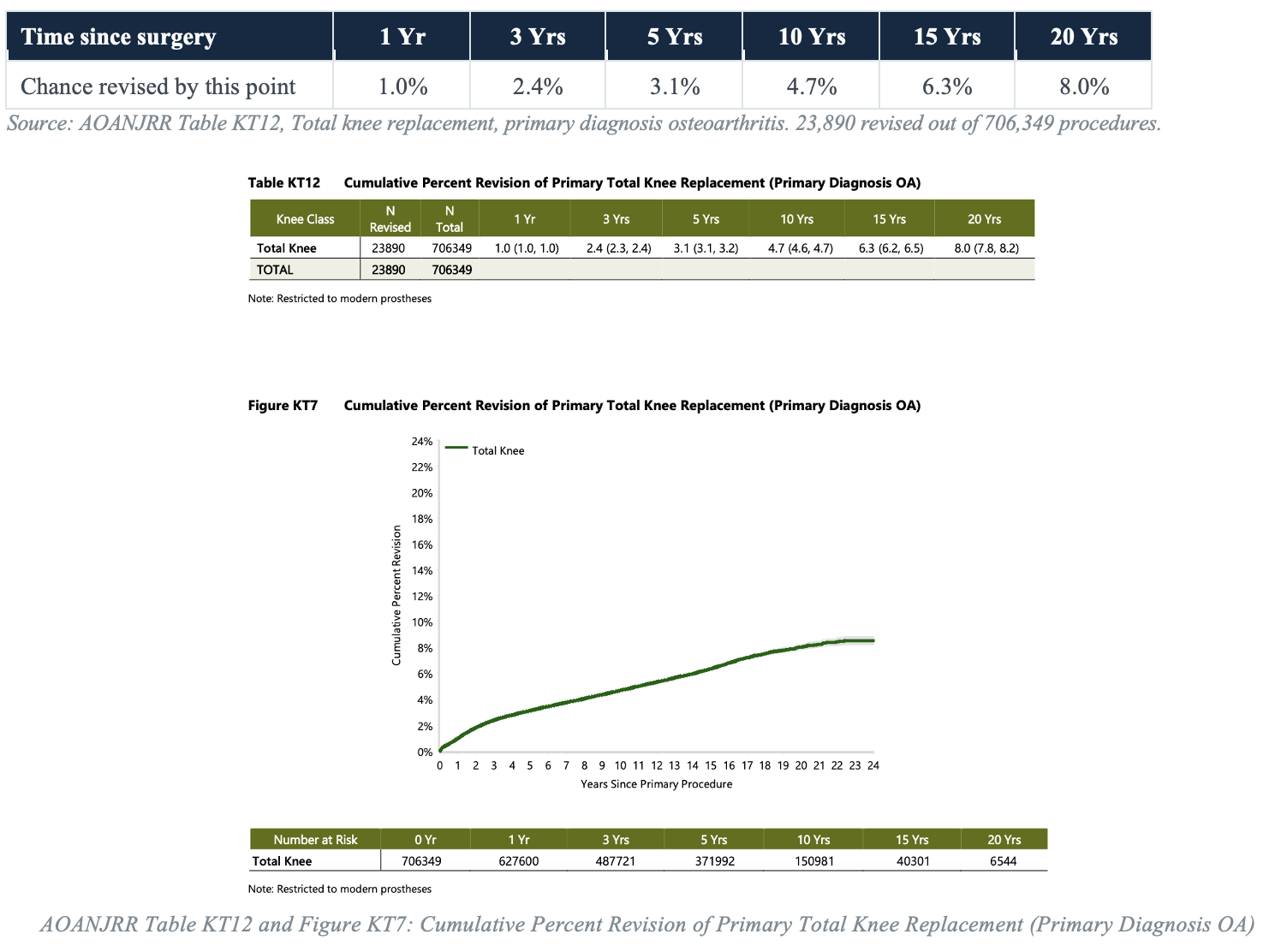
Side by side at 20 years: about 26.7% of partial knee replacements needed fixing again, compared with about 8.0% of total knee replacements.
Why do they need replacing again? The reasons are different for each operation.
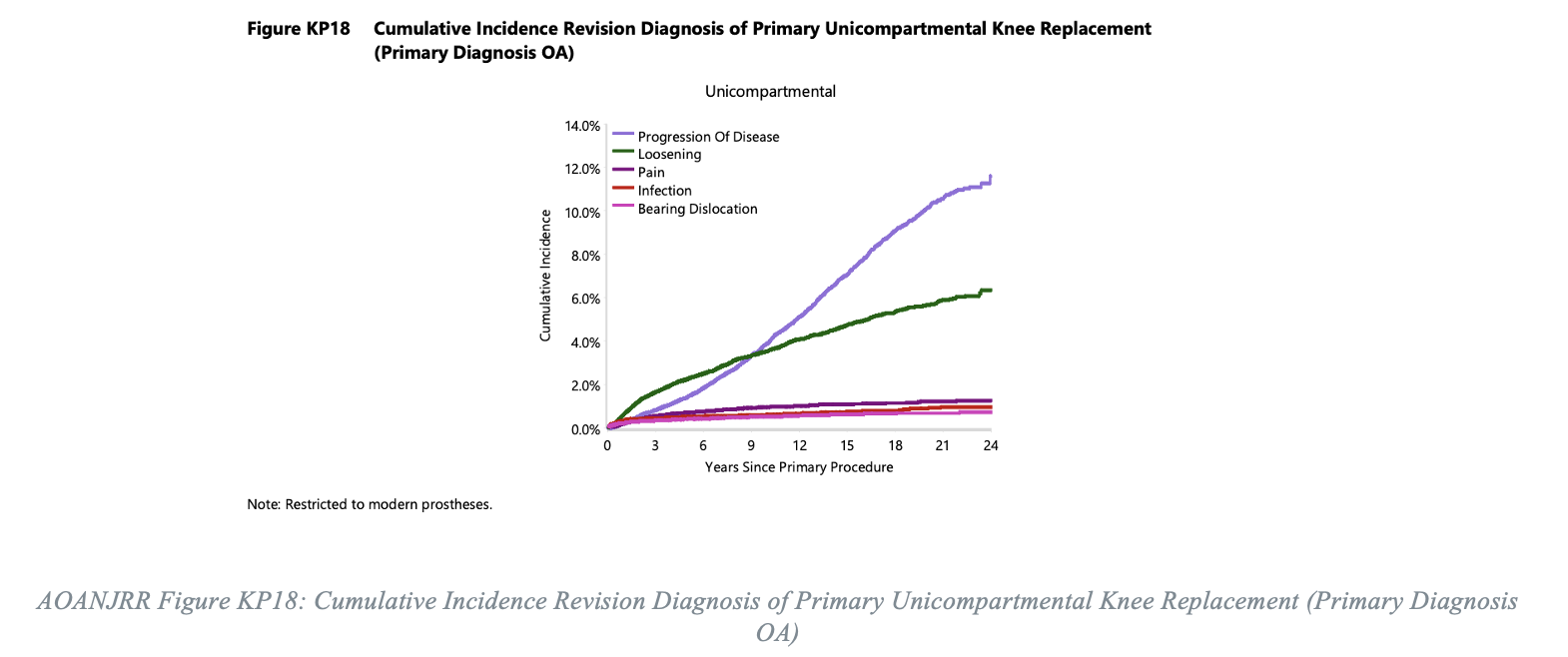
For partial knee replacement, the number one reason is simple: the rest of the knee wears out over time too (the arthritis spreads to the part that wasn't replaced). The implant coming loose is the second biggest reason. Infection, pain, and the plastic part slipping happen much less often.
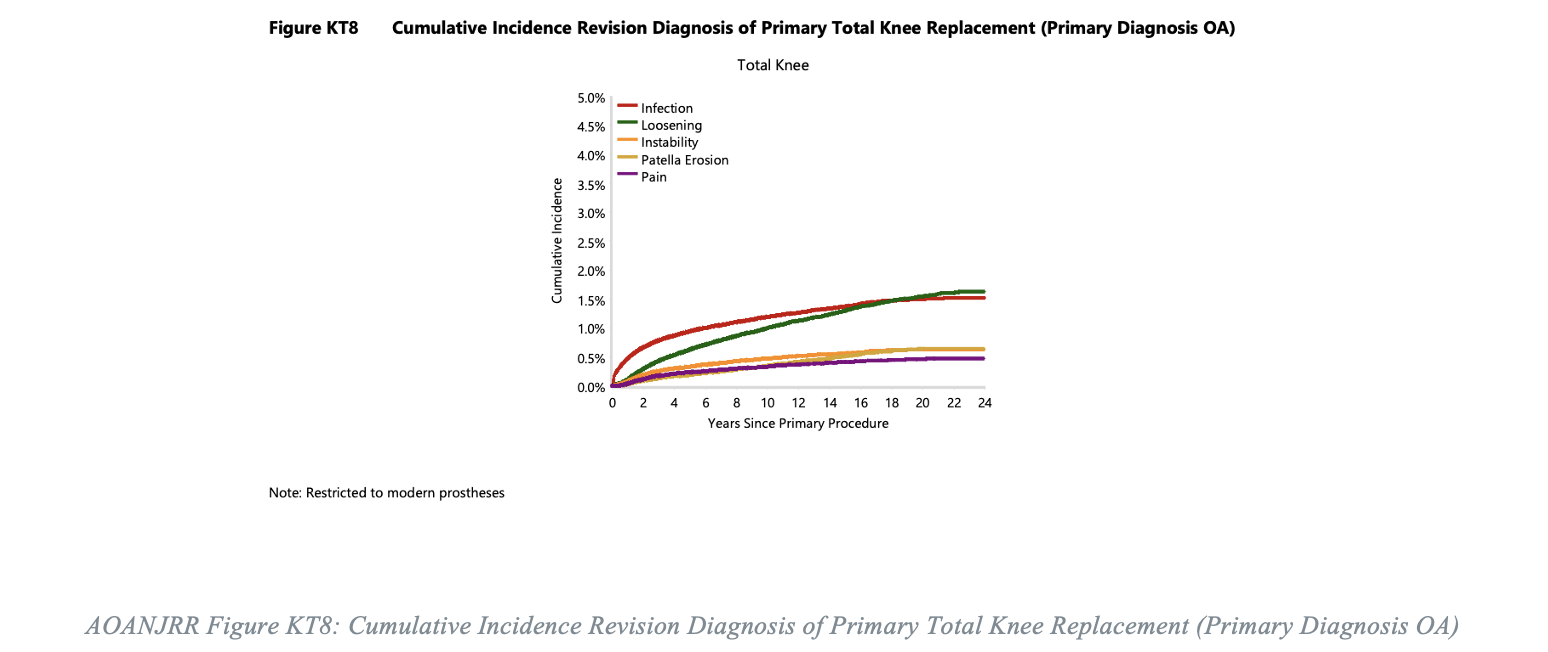
For total knee replacement, infection and the implant coming loose are the two main reasons, at about the same rate as each other. Everything else happens less often, and overall, total knee replacements need replacing far less than partial ones.
Age matters
For both operations, the younger you are when you have surgery, the more likely you'll eventually need it redone. This matters a lot more for partial knee replacement.
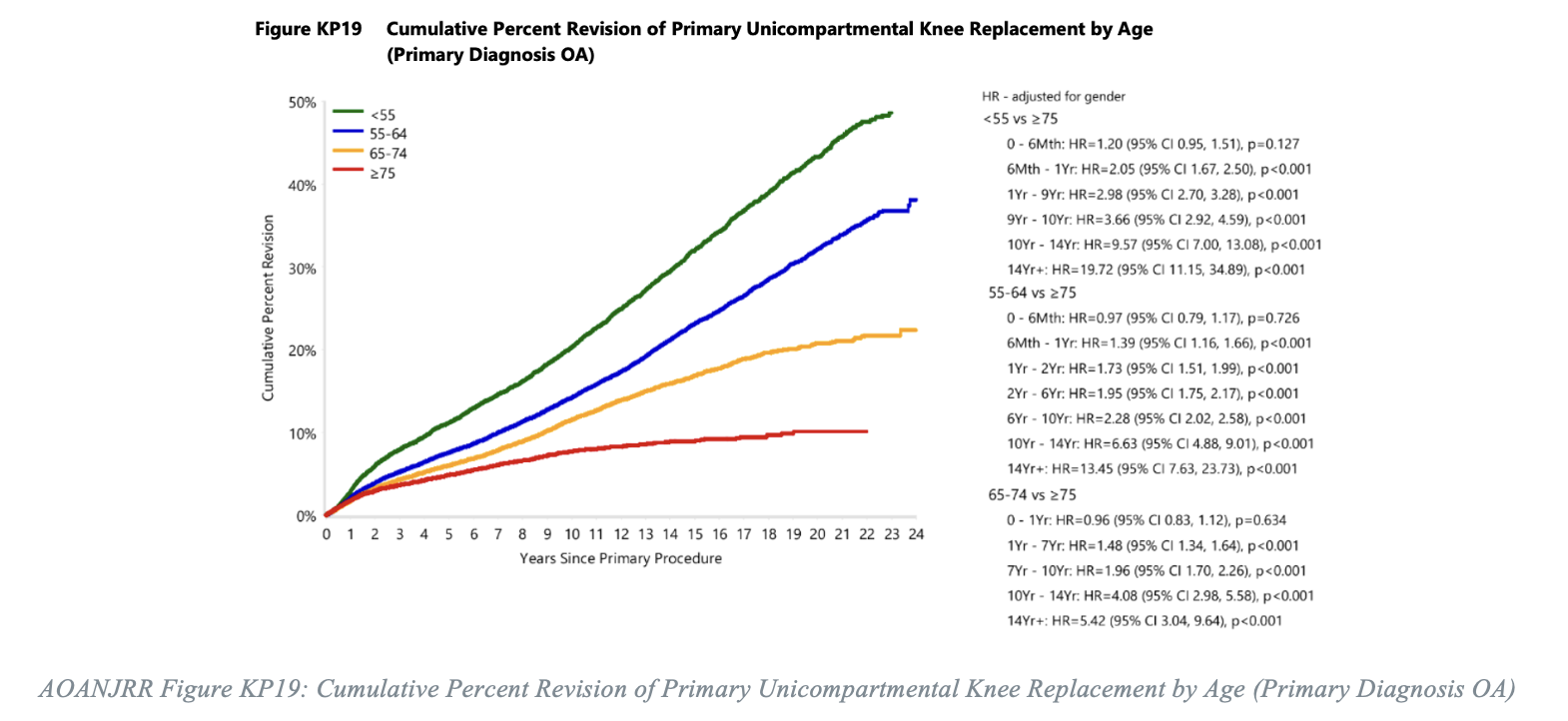
By 20 years, patients who had a partial knee replacement before age 55 have close to a 50% chance of needing it redone. For patients 75 or older at the time of surgery, it's roughly 10%.
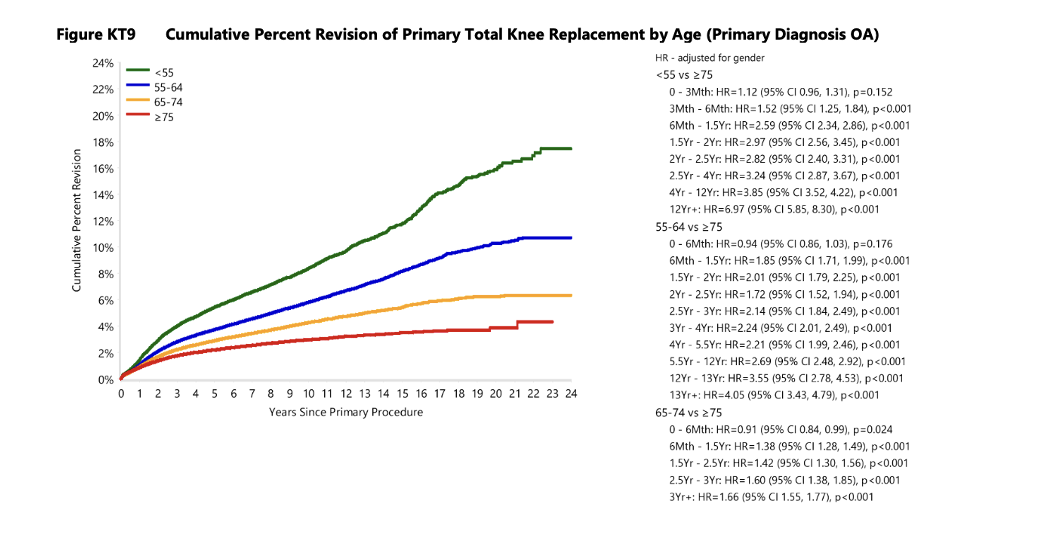
Total knee replacement follows the same pattern, younger patients need more revisions. But even the youngest group (under 55) still has a lower chance of needing a revision than partial knee replacement patients of any age.
Everything above comes from the registry, which records every knee replacement in Australia, but doesn't control who gets which operation. Surgeons and patients choose.
To get a fairer comparison, researchers in the UK ran a study called TOPKAT (Total Or Partial Knee Arthroplasty Trial). It's one of the biggest studies of its kind.
● 528 patients agreed to have their operation decided by chance, like a coin flip, so neither a healthier group nor a sicker group ended up in either arm
● Patients were followed for 5 years, then again at 10 years, and were regularly asked how their knee felt using a standard scoring questionnaire
What TOPKAT found: At both 5 and 10 years, patients did about equally well with either operation, there was no meaningful difference in how the knee felt day to day. Partial knee replacement patients scored slightly higher on quality of life, and their care cost less overall. Importantly, in this study the chance of needing the knee redone was similar between the two groups, unlike the much bigger gap seen in the wider registry data above.
Why the difference? TOPKAT was a smaller, carefully run study, with patients selected as good candidates for either operation and surgeons experienced in both. The registry includes everyone, every surgeon, and every hospital in the country, which is why its revision numbers are higher and more variable. Both pieces of evidence are useful: TOPKAT shows what's achievable under good conditions, and the registry shows what happens on average, across the whole country.
Not everyone gets the same result
These numbers are averages across thousands of patients. They don't promise what will happen to any one person. Two patients can have what looks like the exact same operation and end up feeling differently about it.
Most people say a partial knee replacement feels more "normal", but not everyone. Some patients who choose partial knee replacement still aren't fully happy with how their knee feels, even when the operation went well and never needed fixing. Feeling happy with the result and needing a revision are two separate things. A knee can avoid revision and still not feel the way someone hoped. A knee can be revised and still end up working well.
This is why the decision is personal. The numbers on this page tell you the odds. They can't tell you how your own knee will feel, or whether you'll be one of the people who needs it redone.
Working through the decision
Step 1: Is only one part of the knee worn out, with everything else, like the ligaments, still healthy?
● No, more than one part is worn out, or the knee is unstable → Total Knee Replacement is the option
● Yes, just one part is worn, everything else is healthy → go to Step 2
Step 2: Both operations are possible here. It comes down to which side of the trade-off matters more:
● Care most about the lowest chance of needing it redone → Total Knee Replacement
● Care most about how the knee feels day to day → Partial Knee Replacement
As with all operations, if at any stage anything seems amiss, it is better to call for advice rather than wait and worry. A fever, redness or swelling around the line of the wound or an unexplained increase in pain should all be brought to the Surgeon's attention. You can contact Dr Sundaraj by telephoning his staff during business hours or the Mater Hospital after hours. For any questions, please do not hesitate to contact our staff (02) 9437 5999 For after-hour assistance contact Mater Hospital (02) 9900 7300 Further information is available on our website
Get in touch.
Fill out the form and one of the team will be back in touch within 24 hours.
Alternatively, give us a call on
(02) 9437 5999